
Jeremy Clarkson spent years at Diddly Squat being corrected by Kaleb Cooper over missed rows, bad turns and questionable tractor decisions. Now, after finally becoming more comfortable behind the wheel, he has come up with a solution only Clarkson could find logical: remove the driver altogether. His move toward autonomous farming is funny on the surface, but it also reveals how dramatically his thinking about the farm has changed.
Kaleb Spent Years Teaching Jeremy the Basics, Then Jeremy Changed the Question
From the earliest days of Clarkson’s Farm, tractors became one of the clearest symbols of the difference between Jeremy and Kaleb. Jeremy arrived with enthusiasm, money and a Lamborghini tractor that was famously enormous for the job. Kaleb arrived with the practical knowledge needed to explain why size was not the same thing as suitability. Over the following years, that dynamic repeated itself constantly. Jeremy learned how to cultivate, drill and harvest, but he also made the sort of mistakes that experienced farmers try to eliminate: awkward turns, missed sections and inefficient passes across a field. Kaleb was often the person standing nearby explaining what should have happened instead. That history makes Jeremy’s latest technological obsession unusually amusing. After years of Kaleb teaching him how to operate agricultural machinery properly, Jeremy has started exploring whether he needs to be operating it at all. Prime Video confirms that Season 5 moves Diddly Squat into “high-tech farming,” with Jeremy and Kaleb travelling abroad to investigate new methods before autonomous farming arrives at the farm. Episode descriptions even frame the change as part of a broader attempt to make Diddly Squat run more smoothly.

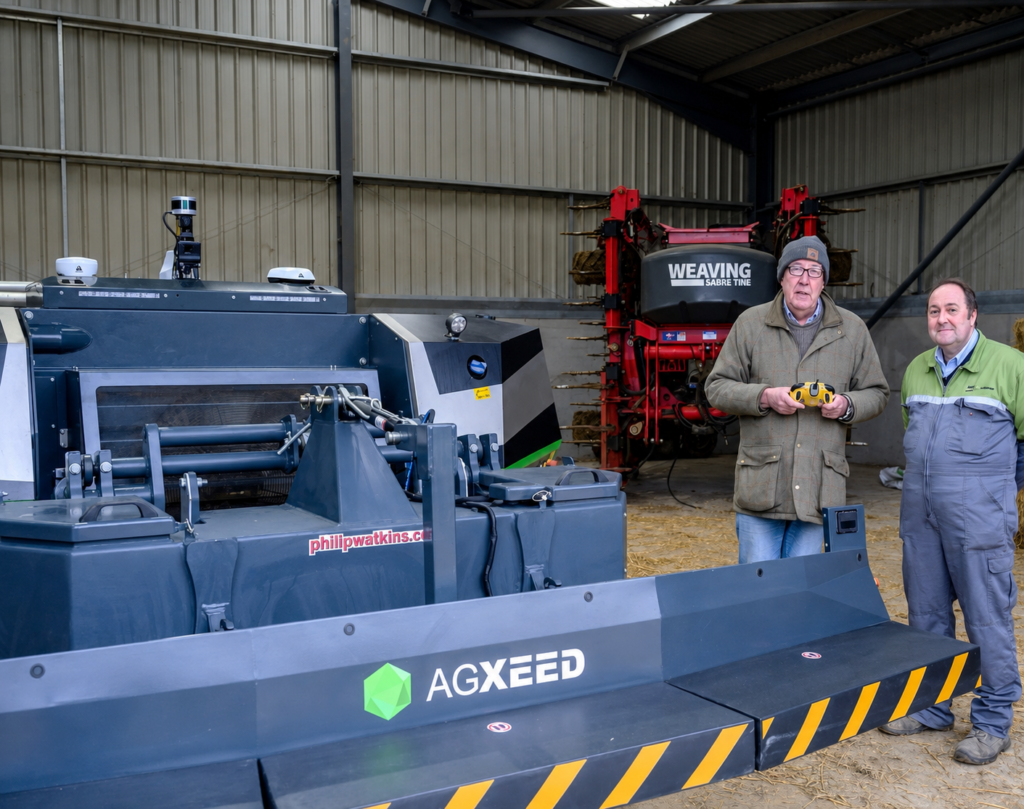
The machine at the centre of Jeremy’s idea is an autonomous tractor capable of carrying out repetitive field work without somebody sitting in the cab for every minute of the job. Clarkson has explained the appeal in practical terms. Preparing roughly 200 acres with a three-metre cultivator can take him about 20 hours, with drilling adding another ten. That means around 30 hours spent travelling backwards and forwards across fields. He has also openly admitted that he still makes mistakes with turns and corners and that a self-driving tractor would not get bored in the way a human operator inevitably can. After years of Kaleb trying to make Jeremy a better tractor driver, Jeremy has essentially decided that the most efficient version of himself may be no driver at all.
Read more: https://showscope.truyengi.me/jeremy-clarksons-quiet-thanks-to-lisa/tqh/
The Driverless Tractor Is Really About Jeremy’s Changing Role at Diddly Squat
The temptation is to treat the idea as another classic Clarkson machine obsession, but there is a more serious reason behind it. Diddly Squat is no longer simply a farm requiring Jeremy to spend long days in one tractor. His working life now includes crops, livestock, the farm shop, The Farmer’s Dog and a growing collection of commercial projects that all compete for his attention. Prime Video’s description of Season 5 explicitly says Jeremy is looking for ways to make life at Diddly Squat less stressful while introducing new technology to the crops. In that context, autonomous farming becomes less about replacing an enjoyable job and more about reallocating time. If a machine can carry out predictable cultivation or drilling work while Jeremy concentrates on another problem, then its value is measured not only in acres covered but also in hours returned to the rest of the farm. That represents a notable shift from the Jeremy viewers met at the beginning. Early Clarkson often approached machinery through power, size and entertainment. The autonomous tractor suggests he is now thinking more seriously about efficiency.

It also changes the comic relationship between Jeremy and Kaleb. Kaleb has spent years as the human correction system for Clarkson’s agricultural mistakes. He knows when Jeremy has gone too fast, turned badly or misunderstood what a field requires. A driverless machine theoretically removes some of those mistakes, but it does not remove Kaleb’s expertise. In fact, the technology makes the distinction between driving and farming much clearer. An autonomous tractor may be able to follow a planned route with extraordinary consistency, but somebody still has to decide when a field should be worked, whether the soil is ready, what should be planted and how the operation fits into the wider crop plan. That is where experience remains essential. Clarkson himself framed Kaleb as worried about the arrival of driverless machinery, but the deeper tension is not really man versus robot. It is about which parts of farming can be automated and which still depend on judgement learned through years of working the land. Kaleb taught Jeremy how to drive a tractor because, at the time, that was what Jeremy needed. Now Jeremy is discovering that running a farm may increasingly mean deciding when nobody needs to drive one.
Clarkson May Finally Have Found a Machine That Solves a Real Diddly Squat Problem
The irony is almost perfect. Jeremy began his farming career by buying a tractor that was too large because he liked it. Years later, he is interested in a tractor with no conventional driver because it might genuinely make the business more efficient. Those two decisions say a great deal about how Diddly Squat has evolved. The first represented Jeremy attempting to force his old motoring instincts onto agriculture. The second suggests agriculture has started reshaping the way Jeremy thinks about machines. Autonomous technology can reduce repetitive driving, follow predetermined routes and potentially cut avoidable overlaps and human errors. But it also comes with a major practical question: cost. Clarkson’s own discussion of the technology makes clear that machines of this kind are expensive, which is why the economics matter just as much as their technical capabilities. For an ordinary farm, saving a few hours is meaningless if the machinery required to save them costs more than the benefit it creates.

That is why Diddly Squat offers such an interesting test. Jeremy can experiment with technology in public and expose both its advantages and its limitations. If autonomous machinery improves accuracy and releases enough labour to justify its expense, it could become an important part of the farm’s future. If it creates new technical problems or fails to produce meaningful savings, Kaleb will probably have several things to say about it. Either outcome fits the larger story Clarkson’s Farm has been telling since the beginning: there is rarely a simple technological shortcut in agriculture. Weather still changes plans, soil still determines what is possible and experience still matters. What has changed is Jeremy himself. The man who once needed Kaleb beside him explaining how to get a tractor through a gateway is now looking at a machine designed to cross the field without him. That does not necessarily mean Kaleb’s lessons were wasted. It may mean Jeremy finally learned the most expensive farming lesson of all: sometimes becoming more efficient is not about learning to drive better it is about knowing when to get out of the seat.






