
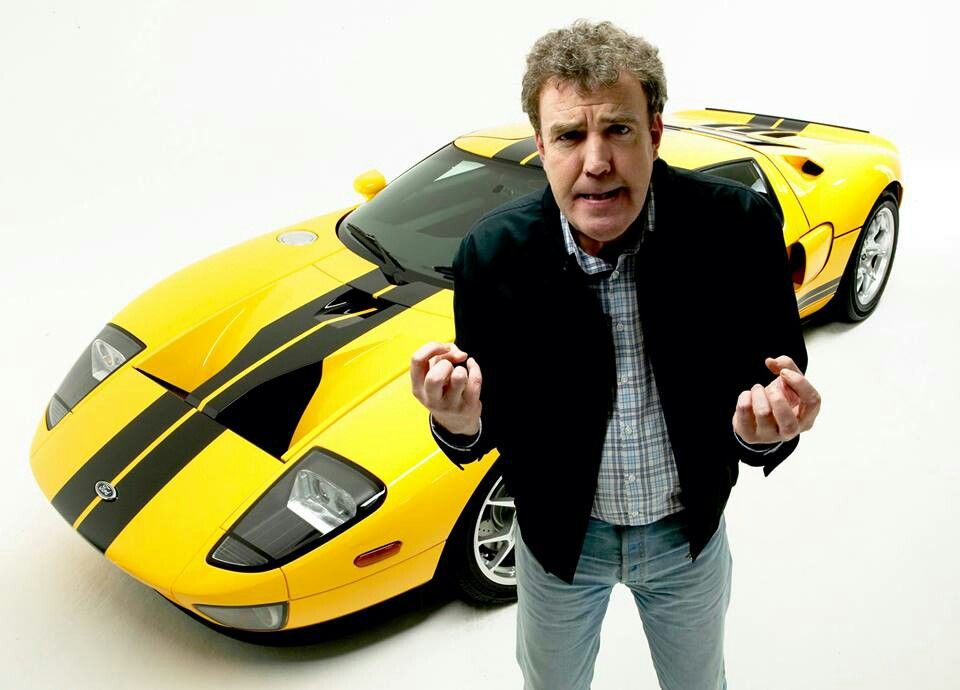
For years, millions of viewers knew Jeremy Clarkson as the loud, argumentative and deliberately provocative face of Top Gear. But Clarkson himself has now offered a revealing distinction between that version of him and the man viewers see running Diddly Squat. Asked which Jeremy was closer to the real person, he described Top Gear as a caricature of its presenters. Farming, he explained, leaves no time for that performance: “There isn’t time to do a caricature of yourself.”
Clarkson Says Top Gear Deliberately Turned Its Presenters Into Bigger Versions of Themselves
Top Gear worked because Jeremy Clarkson, Richard Hammond and James May were never presented as three neutral motoring journalists calmly reviewing cars. Their differences were pushed forward until they became part of the entertainment itself. Jeremy was louder, more impatient and more convinced that speed and horsepower could solve almost anything. May became the cautious, methodical counterweight, while Hammond occupied his own space between them. Clarkson’s description of the programme as a caricature does not necessarily mean those personalities were invented. A caricature normally begins with something real and exaggerates it. That distinction helps explain why the chemistry felt convincing even when the situations around the trio became increasingly absurd. The programme took recognisable parts of each presenter and made them larger because that was what the format required.

Clarkson’s Farm operates under very different conditions. Jeremy can still be impatient, competitive and attracted to machinery far larger than necessary, so the personality familiar from Top Gear certainly has not disappeared. But farming does not wait for somebody to finish performing for television. If cattle need attention, they need it then. If a weather window appears during harvest, the combine has to move. If something goes wrong with a crop, Jeremy cannot simply restart the scene and try a funnier version. That is why his remark that “there isn’t time to do a caricature of yourself” is so revealing. He is not necessarily saying Top Gear Jeremy was false and Diddly Squat Jeremy is completely unfiltered. Instead, he appears to be saying that farming strips away much of the opportunity to deliberately amplify himself. At Diddly Squat, circumstances frequently decide what Jeremy must do before Jeremy has time to decide which version of himself he would like the camera to see.
Read more: https://showscope.truyengi.me/jeremy-clarksons-quiet-thanks-to-lisa/tqh/
Diddly Squat Shows Clarkson in Situations His Old Television Character Could Not Control
The difference becomes clearest when things go badly. Top Gear was built around entertainment. Even disaster could become part of the joke because Jeremy, Hammond and May were ultimately making a television programme about cars and adventures. Clarkson’s Farm contains plenty of comedy too, but some of its strongest moments appear when humour stops being enough. Crops fail. Animals become ill. Weather destroys carefully made plans. Financial calculations reveal how much work has produced surprisingly little profit. Jeremy has also had to deal with the emotional consequences of raising livestock and the wider pressures surrounding British farming. Those situations do not eliminate his instinct to make jokes, but they place something underneath them that Top Gear rarely required: personal responsibility for what happens after the camera stops.

Kaleb Cooper is important to that change because he gives Jeremy almost no room to maintain the image of the man who always knows best. In the motoring world, Jeremy’s confidence was part of the entertainment. On the farm, confidence without knowledge can mean missed drilling, damaged machinery or wasted money. Kaleb can simply tell him he is wrong, and agricultural reality usually decides who wins the argument. Lisa Hogan and Charlie Ireland create similar pressures from different directions. Lisa sees the practical consequences of Jeremy’s business decisions, while Charlie repeatedly brings costs, regulations and uncomfortable numbers into conversations Jeremy would rather approach through optimism. One possible interpretation is that these relationships make Clarkson’s Farm more revealing precisely because Jeremy does not control his position within them. He may be the famous name on the programme and the owner of Diddly Squat, but he is frequently the least knowledgeable person in the conversation. The result is a version of Clarkson that can still be difficult, funny and overconfident while also being visibly worried, uncertain, attached to animals or forced to admit that somebody else was right.
Clarkson’s Farm May Explain Why Audiences Now See Jeremy Differently
Clarkson’s comment also helps explain why his farming programme has changed the way some viewers understand him. Top Gear gave audiences an extremely successful television personalitand a man who could turn a disagreement about a car into an international argument and make excessive machinery feel like a philosophy. Clarkson’s Farm has not completely replaced that person. In fact, much of the humour depends on him still being recognisably Jeremy Clarkson. The difference is that the farm adds consequences. An oversized tractor is funny until it cannot fit somewhere it needs to go. A bold business idea becomes less amusing when Charlie explains the bill. Keeping animals becomes emotional when their future is no longer theoretical. Farming repeatedly forces Jeremy to move from commentator to participant, and that may be what he means when he says there is no time for the caricature.

It would be too simple to claim that Clarkson’s Farm finally reveals the single “real Jeremy” while everything before it was an act. Television remains edited television, and Clarkson is still an experienced broadcaster who understands exactly how entertaining his mistakes can be. His own words suggest something subtler. Top Gear magnified personalities to make the programme work; farming gives him fewer opportunities to decide what should be magnified. Diddly Squat provides weather, animals, money and other farmers capable of interrupting whatever performance Jeremy might have planned. That makes his vulnerability harder to hide and his successes more dependent on people around him. After decades in which Clarkson was usually the loudest person in the room, Clarkson’s Farm has put him somewhere noise alone cannot win. Perhaps that is why the programme can feel more personal than anything he made before it. Top Gear showed Jeremy Clarkson turning himself up for television. Diddly Squat often shows what remains when the farm is too busy to let him do it.






