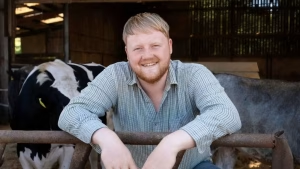
Jeremy Clarkson has finally reached the point where the latest chapter at Diddly Squat is almost in the bag.
After another punishing stretch of farming chaos,
Series 6 is nearly finished
but Clarkson’s answer about what comes next is far less certain.
With the cameras almost ready to stop rolling, one short remark has suddenly left fans wondering whether the farm’s most chaotic television chapter is really nearing its end.
The Finish Line Is Finally Coming Into View
For Jeremy Clarkson, declaring a farming project “nearly done” is rather like announcing that a tractor has almost stopped after driving through a wall: technically encouraging, but nobody should celebrate until the machinery is actually stationary.
Yet this time, Clarkson has confirmed that production on
Series 6 of Clarkson’s Farm
is approaching the finish line, giving fans their clearest indication yet that another season of Diddly Squat chaos is moving toward post-production.
The timing matters because the latest filming period has been portrayed as an especially demanding one for agriculture, with weather, working conditions and the unpredictable nature of farming constantly threatening to derail carefully constructed plans.
Clarkson, naturally, remains Clarkson the man capable of looking at a complicated agricultural problem and responding as though the obvious solution is to purchase something enormous and hope nobody asks how much it cost.

But getting through an entire filming cycle is a different challenge from surviving one spectacularly disastrous afternoon with a piece of machinery.
Series 6 represents months of decisions, setbacks, arguments, livestock, crops, business pressures and the endless battle between Clarkson’s grand ideas and the stubborn reality of farming.
And somewhere behind the scenes, the cameras have been collecting the consequences.
The farm may still look like the same patch of Oxfordshire countryside, but television production has turned its everyday problems into another long endurance test.
Now, with filming nearly complete, Clarkson can finally begin looking beyond the immediate chaos although, judging by his history, that is precisely when another problem tends to appear.
Clarkson Wants the Future But Reality Refuses to Sign the Contract
The intriguing part came when Clarkson was asked about
Series 7
.
Instead of delivering the sort of triumphant announcement fans might have hoped for, he left the door open with the brief remark:
“Nearly done six, and then who knows.”
That tiny sentence carries considerably more uncertainty than Clarkson probably intended.
Series 7 has
not been confirmed
, and treating it as a done deal would turn an open question into something it simply is not.
But neither did Clarkson slam the door shut.
For a show built around a man repeatedly discovering that farming is considerably harder than it looks, that uncertainty feels almost perfectly on brand.

There are plenty of reasons why another series would involve more than simply pointing cameras at Diddly Squat again.
Every new season requires more time, more filming, more production work and another willingness to expose the farm’s triumphs and disasters to millions of viewers.
And then there is the farm itself, which has a remarkable habit of refusing to follow a television schedule.
Kaleb Cooper can complain about Clarkson’s latest scheme, Charlie Ireland can arrive carrying the sort of information that instantly ruins an expensive idea, and the weather can decide that everyone’s timetable is merely a suggestion.
Clarkson may be perfectly comfortable gambling on a giant machine or an ambitious business idea, but even he cannot order the seasons around.
That makes the end of Series 6 particularly interesting.
The cameras may soon stop, but the problems that created the drama do not disappear when filming does.
If anything, the end of production could leave Clarkson facing the same question that has followed him throughout the series: how much more chaos is he actually prepared to take on?
Read More:
Clarkson’s 11 Sheep Drama Takes a Dark Turn as Kaleb Refuses to Play Along
The Farm May Be Ready for a Break But Farming Never Is
Whatever happens with Series 7, the end of Series 6 highlights something much bigger than television.
Diddly Squat is entertaining precisely because it repeatedly exposes the enormous gap between a confident plan and the brutal unpredictability of farming.
Clarkson can spend hours imagining how a project should work, only for rain, costs, regulations, animals or agricultural reality to arrive with a clipboard and destroy the spreadsheet.
That tension is what makes the show work, but it also reflects a genuine pressure faced by farmers: the business does not pause simply because conditions have become difficult.

Crops still need attention, animals still need care, machinery still needs maintaining and bills still have to be paid.
Clarkson has the unusual luxury of turning some of these struggles into television, but the underlying problems are not uniquely his.
Series 6 therefore arrives at an interesting moment.
Its filming is nearly complete, yet the story of Diddly Squat remains unfinished regardless of what happens to the cameras.
Clarkson’s “who knows” about Series 7 leaves the future deliberately open rather than confirmed, and perhaps that uncertainty is fitting.
After all, this is a farm where a seemingly simple idea can become a logistical nightmare before lunchtime.
The only thing more predictable than Clarkson announcing another ambitious plan is the likelihood that reality will have its own plan waiting.
Series 6 may be nearly done, but at Diddly Squat, “nearly done” has never meant “quiet.”