
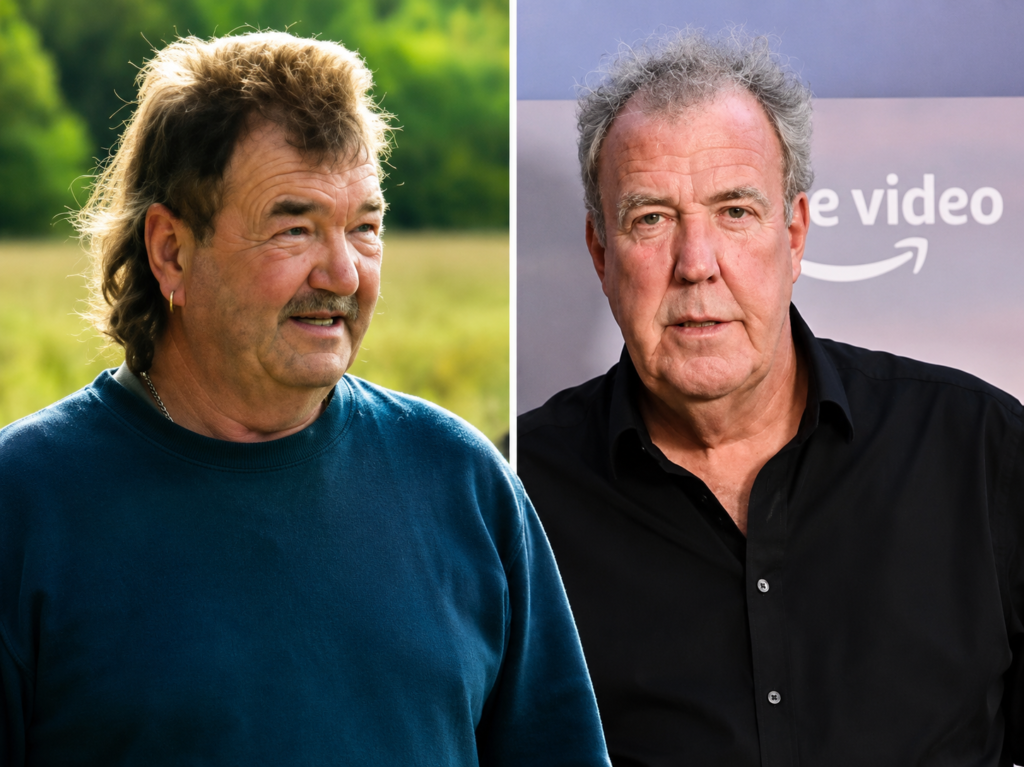
Jeremy Clarkson arrived at Diddly Squat believing farming required confidence, machinery and the ability to ignore anyone saying “that will never work.” Gerald Cooper offered something far more valuable: patience, local knowledge and a loyalty that never needed explaining. While Clarkson’s plans repeatedly collided with weather, cost and common sense, Gerald remained one of the few people capable of making the farm feel rooted rather than improvised. His influence did not arrive through grand speeches, but through small moments that gradually changed how Clarkson understood farming, community and friendship.
Gerald Showed Clarkson What Belonging Really Looks Like
Clarkson may own Diddly Squat, but Gerald represents the deeper history of the land. He understands the fields, the weather and the rhythms of rural life in a way that cannot be purchased with a new tractor, no matter how enormous the tractor or how loudly Jeremy explains its horsepower. When Clarkson first began farming, he approached the job like a man entering battle with the wrong map and absolute faith in the size of his vehicle. Gerald offered a different kind of authority. He did not need spreadsheets, television experience or expensive equipment to prove that he belonged there. His knowledge came from years of living and working in the same landscape, watching seasons change and understanding that the countryside rewards patience while humiliating

arrogance with remarkable efficiency. That contrast mattered. Clarkson saw farming as a challenge he could conquer; Gerald showed him that it was a life he had to join. Their conversations became one of the show’s greatest sources of comedy because Jeremy often appeared to understand only half of what Gerald said, nodding with the confidence of a diplomat who had lost the translator. Yet beneath the confusion was genuine respect. Clarkson listened because Gerald carried the voice of the local community, the people who remembered the land before cameras, queues and branded merchandise arrived. In Gerald, Jeremy found someone who could laugh at the chaos without dismissing the seriousness of the work. He was not impressed by celebrity, but he was willing to help, advise and stand beside Clarkson as the farm stumbled from one crisis to the next. That steadiness began changing Jeremy long before he was willing to admit it.
The Farm’s Loudest Man Learned Strength from Gerald’s Quiet Loyalty
At Diddly Squat, problems rarely arrive one at a time. A broken machine is normally followed by terrible weather, an unexpected bill and Charlie Ireland appearing with a document thick enough to stop a tractor. Clarkson responds by becoming louder, more confident and strangely certain that a new purchase will solve everything. Gerald responds differently. He shows up. That simple reliability became deeply important to Jeremy because farming exposed vulnerabilities that television had allowed him to disguise. Crop failures could not be edited into success. Livestock did not care about reputation. Financial losses remained losses even when they produced excellent entertainment. Gerald’s presence offered Clarkson reassurance without sympathy becoming embarrassing. He could joke, work and continue, allowing Jeremy to feel supported without forcing him into a conversation about feelings that might cause

him to escape through the nearest hedge. When Gerald faced his own serious health struggle, the emotional balance shifted. Clarkson, who had relied on Gerald’s strength, suddenly had to confront the possibility of losing one of the people who made Diddly Squat feel like home. The man famous for sarcasm and provocation became visibly affected because Gerald was no longer simply a cheerful local figure appearing beside a stone wall. He was a friend. His absence changed the atmosphere of the farm, reminding Clarkson that the people around him were not replaceable parts in one of his projects. Machines could be repaired, fields could be replanted and even expensive mistakes could eventually become jokes. Human relationships carried a different weight. Gerald’s courage and determination inspired Clarkson precisely because they lacked the theatrical drama Jeremy usually understood. Gerald faced hardship with dignity, warmth and the same grounded spirit he had always brought to the farm. Watching that resilience forced Clarkson to recognise a kind of bravery that had nothing to do with speed, noise or refusing to read instructions.
Gerald Changed Clarkson’s View of Farming and of Himself
Gerald’s deepest influence on Clarkson lies in how he helped transform Diddly Squat from a personal experiment into a community. Jeremy began with the belief that the farm’s story would centre on his own mistakes, discoveries and increasingly expensive solutions. Instead, people like Gerald revealed that agriculture is sustained by memory, loyalty and relationships extending far beyond one owner. Gerald connected Clarkson to the village, to older farming traditions and to the idea that land carries human history as surely as it carries crops. His humour softened difficult days, while his presence reminded Jeremy that success could not be measured only in yield, profit or visitor numbers. A farm could lose money and still create something valuable. It could become a place where people felt seen, where local knowledge mattered and where friendship survived arguments, illness and weather arriving as though

Oxfordshire had personally offended the clouds. Clarkson’s admiration for Gerald also exposed a more human side of the supposedly unstoppable television personality. He could still mock bureaucracy, buy machinery large enough to require its own postcode and insist that disaster was merely a temporary misunderstanding. But Gerald taught him that strength was not always about dominating a problem. Sometimes it meant enduring it. Sometimes it meant accepting help. Sometimes it meant remaining cheerful when the future felt uncertain. That lesson reaches far beyond Diddly Squat. British farming is full of people who continue despite financial pressure, isolation and conditions no business plan can control. Gerald embodies that persistence without demanding applause for it. Clarkson may remain the loudest figure on the farm, but Gerald became one of its strongest voices because he never needed to raise it. Jeremy arrived believing he would teach the public about farming through his own failures. Instead, Gerald quietly taught him that the greatest achievement was not mastering the land, but becoming worthy of the people who had cared for it long before he arrived.






